
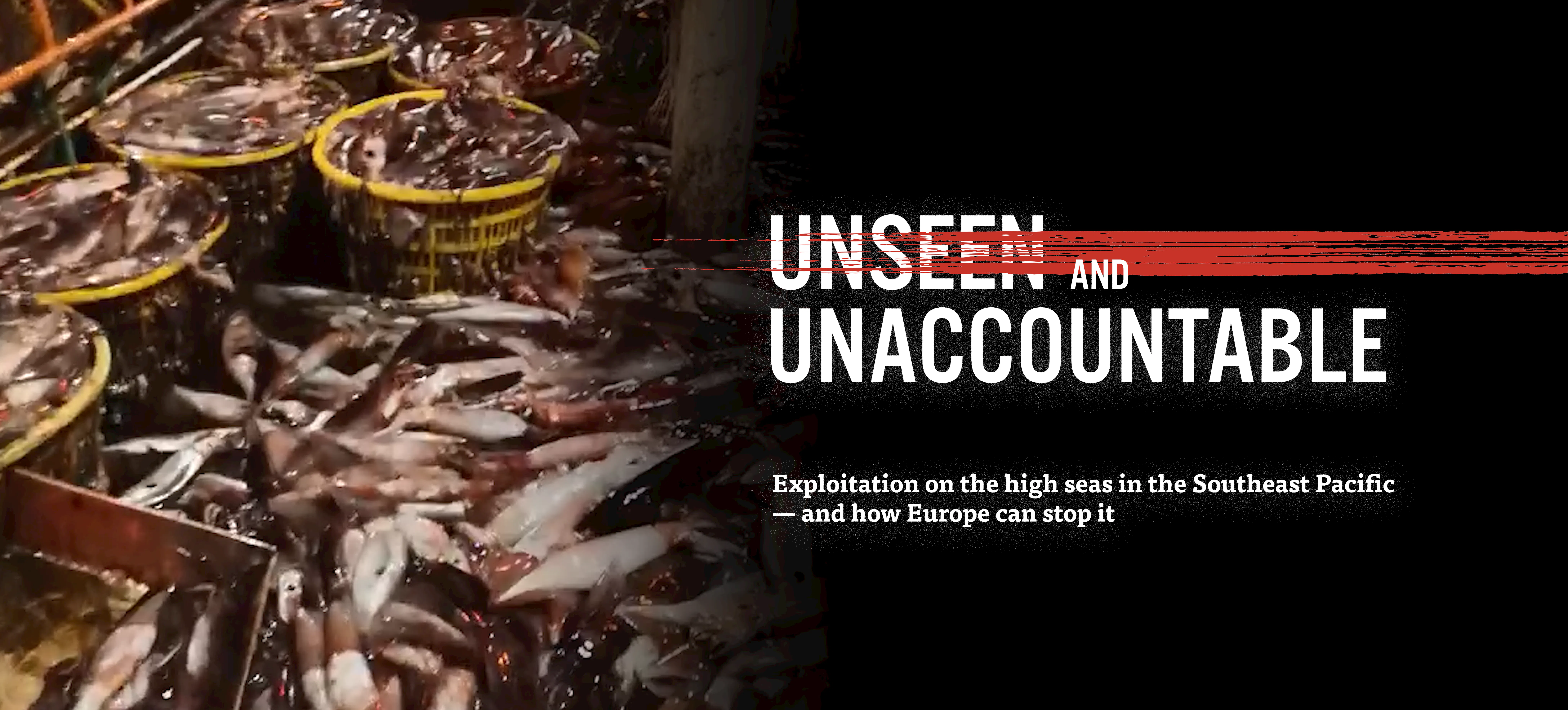

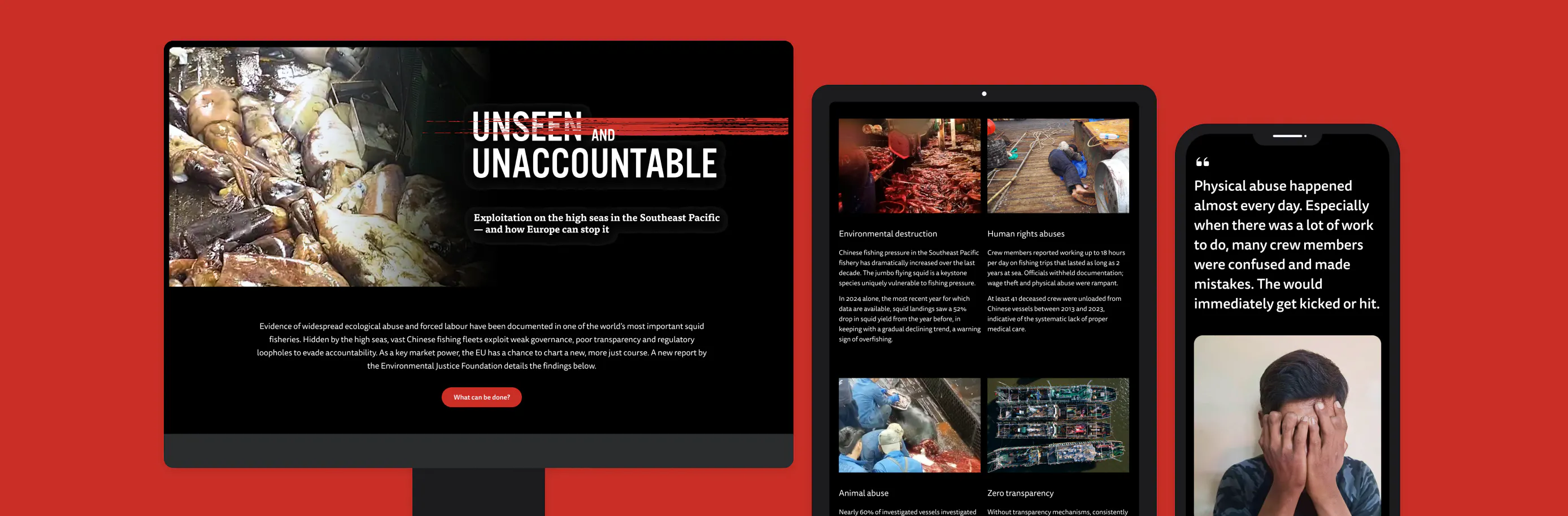
Evidence of widespread ecological abuse and forced labour have been documented in one of the world’s most important squid fisheries. Hidden by the high seas, vast Chinese fishing fleets exploit weak governance, poor transparency and regulatory loopholes to evade accountability. As a key market power, the EU has a chance to chart a new, more just course, and regional authorities also have a key role to play. A new report by the Environmental Justice Foundation details the findings below.
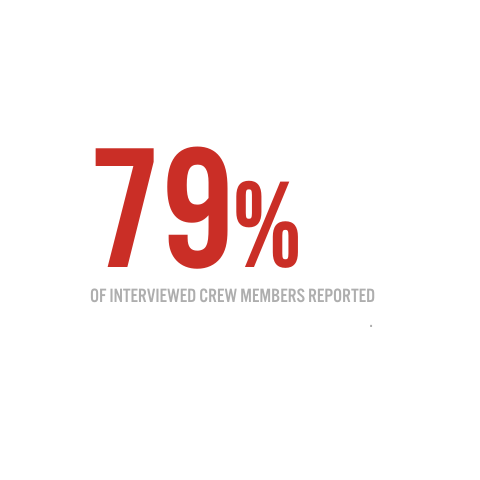
This investigation adds to a growing volume of evidence of fisheries and human rights abuses in the Southeast Pacific DWF squid fishery, including fishing in prohibited areas, physical violence, the misreporting of catch volumes, and the disabling of vessel monitoring systems.
Exploitation in all forms

Environmental destruction
Chinese fishing pressure in the Southeast Pacific fishery has dramatically increased over the last decade. The jumbo flying squid is a keystone species uniquely vulnerable to fishing pressure.
In 2024 alone, the most recent year for which data are available, squid landings saw a 52% drop in squid yield from the year before, in keeping with a gradual declining trend, a warning sign of overfishing.
ㅤㅤ

Human rights abuses
Crew members reported working up to 18 hours per day on fishing trips that lasted as long as 2 years at sea. Officials withheld documentation; wage theft and physical abuse were rampant.
At least 41 deceased crew were unloaded from Chinese vessels between 2013 and 2023, indicative of the systematic lack of proper medical care.
ㅤㅤ
Animal abuse
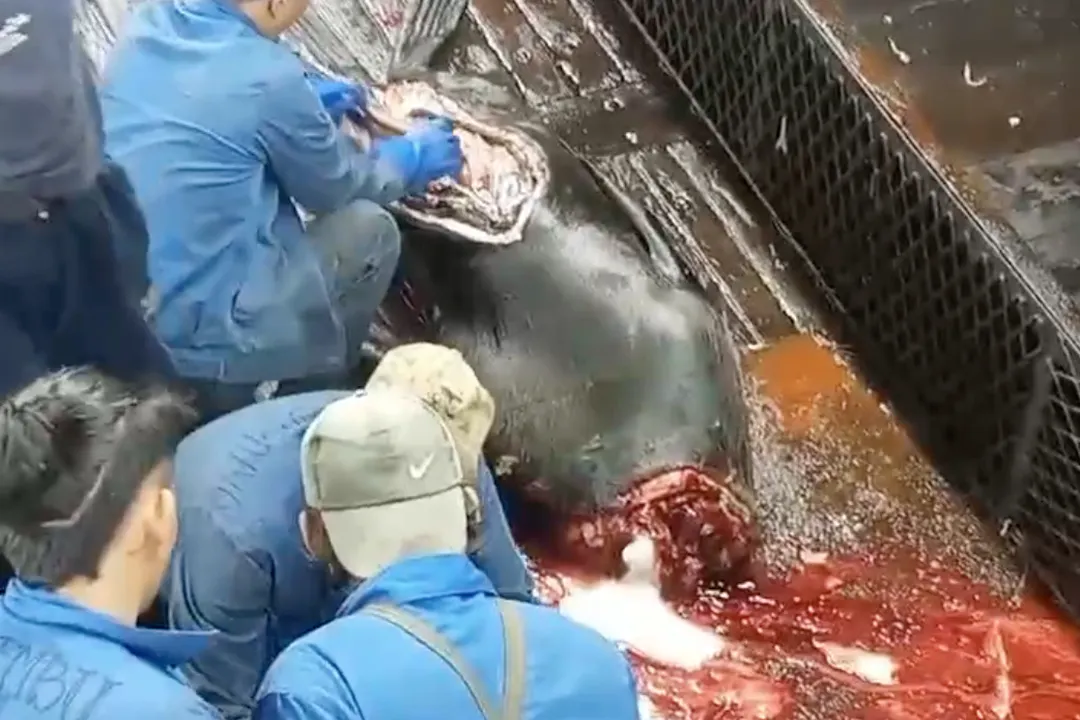
Nearly 60% of investigated vessels investigated allegedly caught and finned sharks while they were still alive, a notoriously cruel and illegal practice.
The alleged intentional capture and fanging of seals took place on one-third of the vessels investigated.
ㅤㅤ

Zero transparency
Without transparency mechanisms, consistently vetoed by China at regional fishery management meetings, illegality is the norm. Reported offenses include fishing in prohibited areas, misreporting catch totals, and disabling vessel monitoring systems.
Flouting these compliance measures opens the door for Chinese fleets to continue overfishing already depleted waters and abusing crew members, wildlife and the environment under cover of darkness.
ㅤㅤ
ㅤ

ㅤ
ㅤ
How can Europe and Latin America increase accountability?
Coastal, port and market states can work together on comprehensive regulations that solve the present crisis. The upcoming meetings of the South Pacific Regional Fisheries Management Organisation (SPRFMO) are an opportunity for the EU to collaborate with Latin American countries on curbing abuse and avoiding fishery collapse by:

Following Peru’s lead to promote mandatory vessel monitoring, transparency, and compliance reporting from distant-water fishing fleets in the South Pacific.

Advocating for the elimination or strict regulation of at-sea transshipment, a practice that keeps crew stuck at sea for years and enables IUU fishing to go undetected.

Pushing for science-based catch limits and fleet quotas for jumbo squid and the introduction of bycatch protection measures for sharks, cetaceans, seals, and other charismatic species.

Setting the tone for global fisheries governance as responsible states through the implementation and enforcement of legal, ethical, and sustainable seafood practices.

Working together on port-state inspection mechanisms and ratification of important labour standards such as C188 (Work in Fishing Convention)like C188 (Work in Fishing Convention) to secure ethical and traceable seafood supply.

Endorsing and implementing the Global Charter for Fisheries Transparency, ten low- to no-cost recommendations to ensure sustainable, ethical and legal fisheries free from from IUU fishing and human rights abuses.
ㅤ
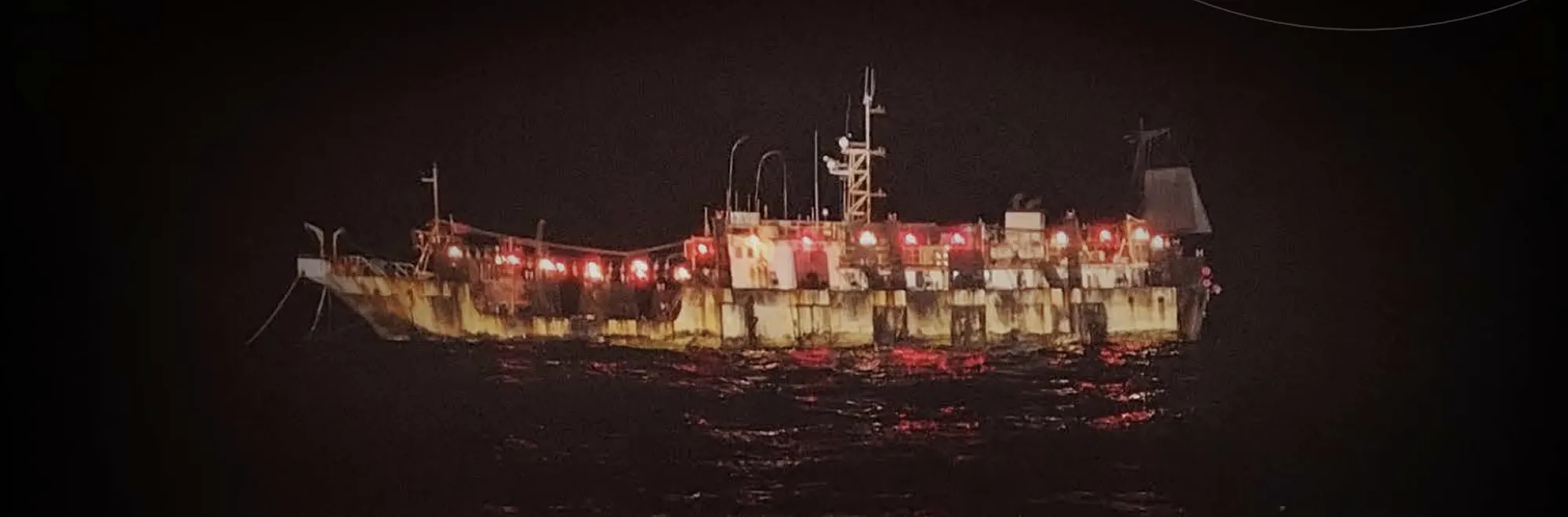
The growing threat of China’s squid fleet in the Southeast Pacific
ㅤ

Stay up to date
Get the latest updates on Europe’s role in supporting sustainable and ethical fisheries across the Pacific and beyond.
Powered by


ㅤ